
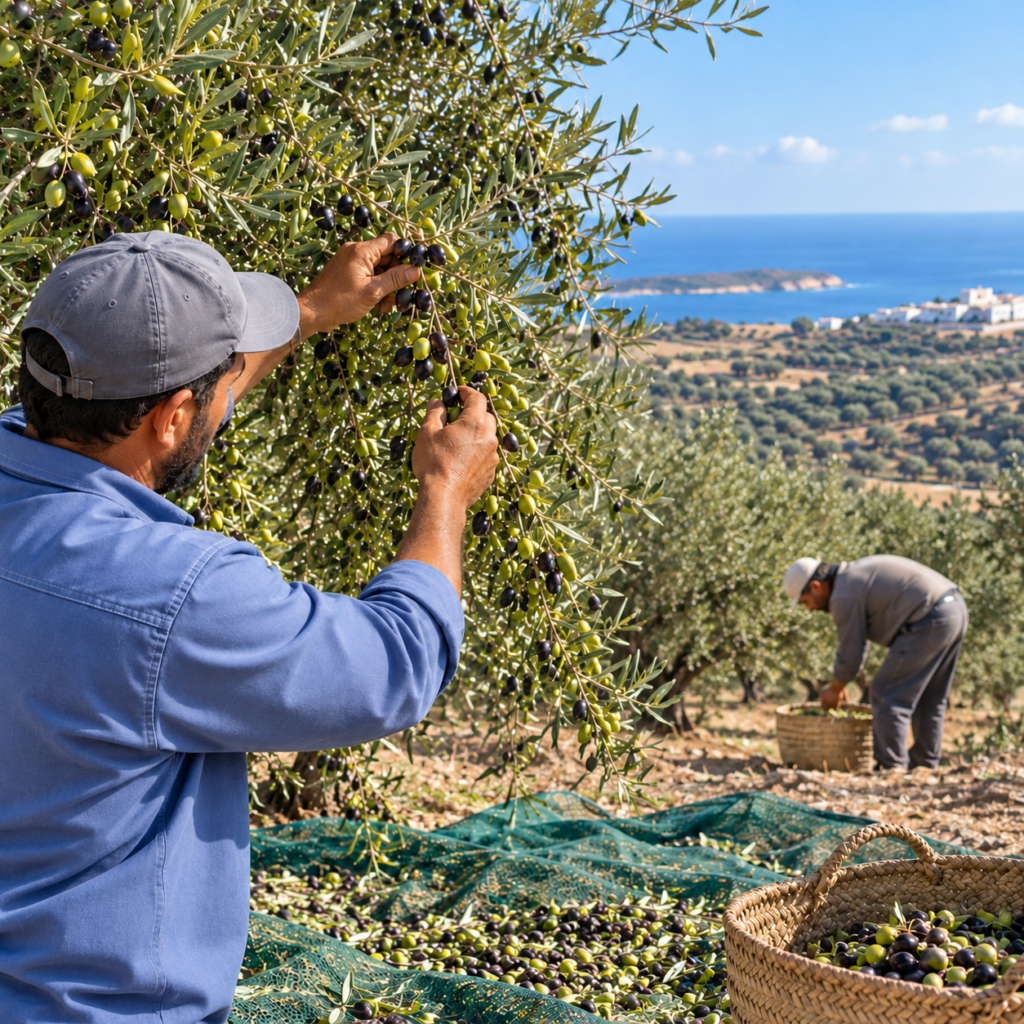
Where Quality Begins
Exceptional olive oil starts with exceptional olives.
We carefully monitor the maturity of our olives to determine the right harvesting moment, balancing fruit character, aroma, freshness, and natural antioxidants.
Harvesting is carried out with care to minimize damage to the fruit and preserve its quality from the grove onward.
Once harvested, the olives are transported promptly to the mill, where they are processed as quickly as possible.
This short journey from tree to mill is essential to preserving freshness and preventing unwanted fermentation or deterioration.
Fresh olives. Prompt handling. Quality from the very beginning.
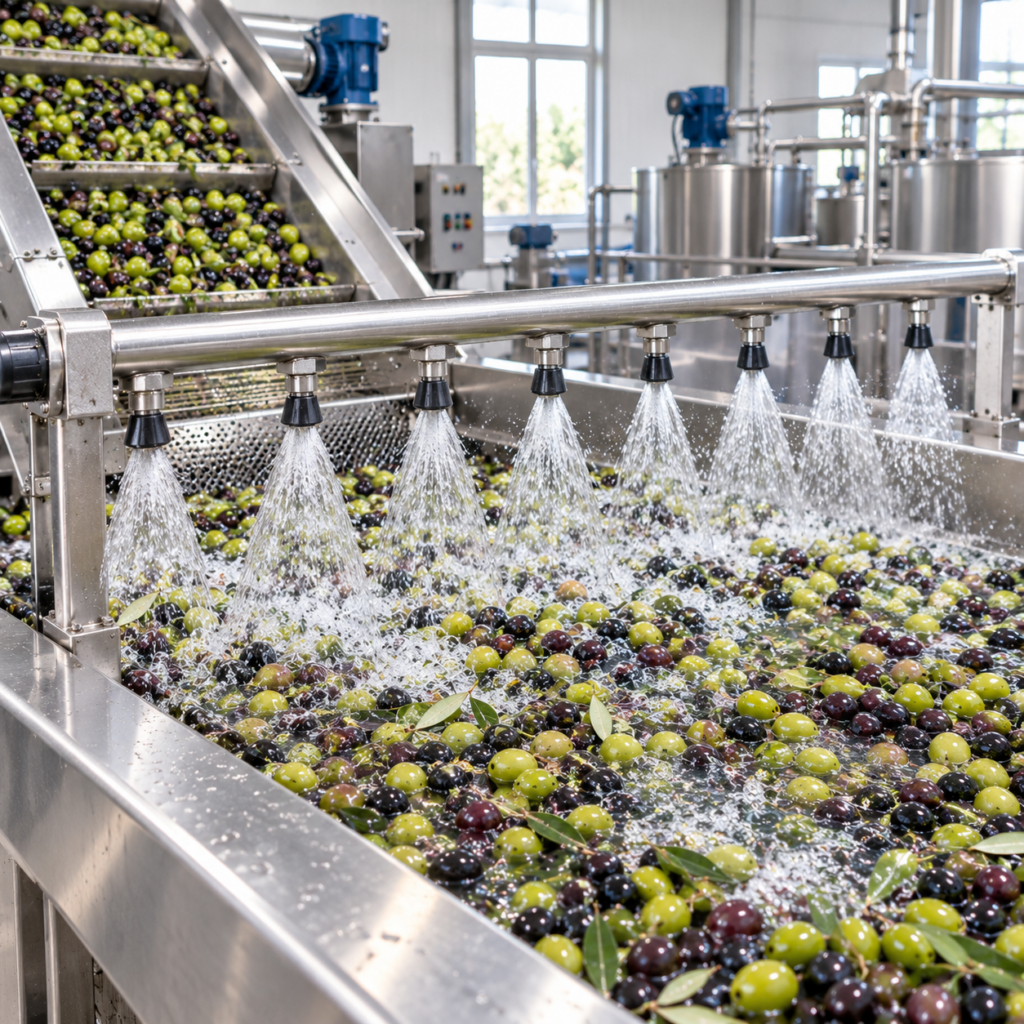
Preparing the Fruit
When the olives arrive at the mill, they are carefully received and inspected before processing.
Leaves, twigs, and other foreign materials are removed, while the olives are cleaned to eliminate dust, soil, and other impurities.
This preparation ensures that only clean, healthy fruit enters the production process.
Only the olive should define the character of the oil.
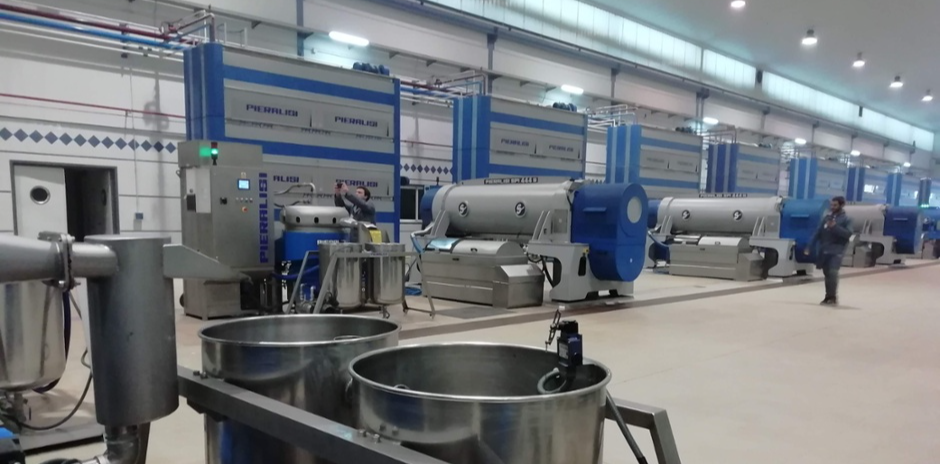
Releasing the Olive's Natural Oil
The cleaned olives are crushed to form a homogeneous olive paste.
This mechanical process breaks the olive cells and releases the tiny droplets of naturally contained oil, while preserving the essential components of the fruit.
The objective is simple: extract the oil while maintaining the distinctive aromas and characteristics created by the olive variety and its Tunisian terroir.
No chemical extraction. Just the olive and a carefully controlled mechanical process.
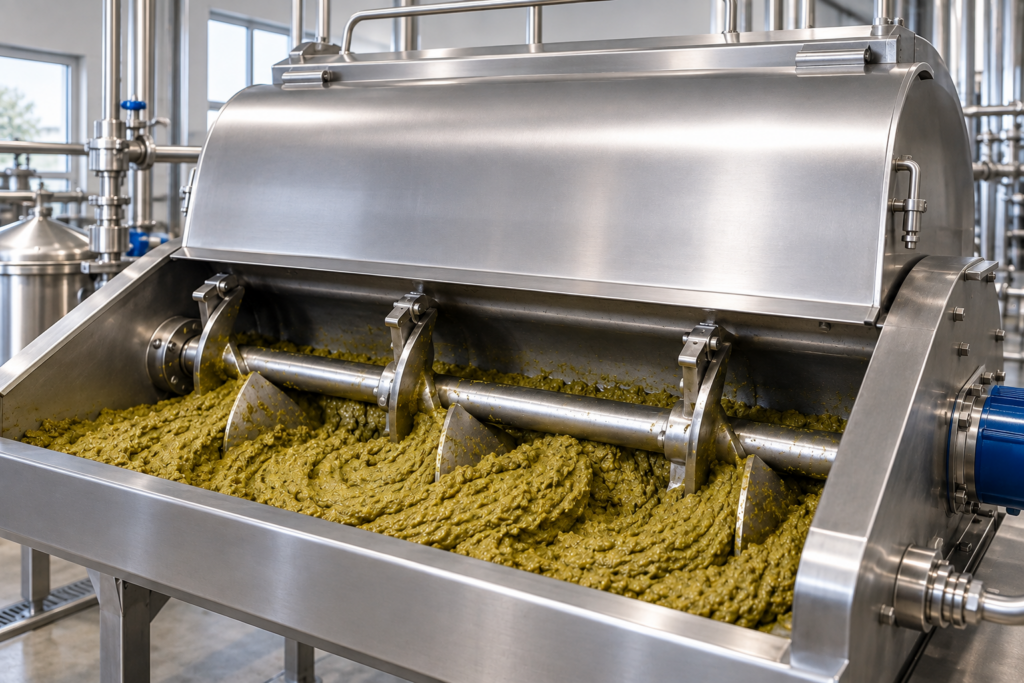
Bringing the Oil Droplets Together
The freshly produced olive paste is gently and slowly mixed under carefully controlled conditions.
During malaxation, the microscopic droplets of oil naturally come together, forming larger droplets that can be separated more efficiently during extraction.
At Pure Gold, temperature and processing time are carefully controlled to protect the delicate aromas and natural qualities of the oil.
For our cold-extracted oils, processing is carried out at temperatures below 27°C, in accordance with the applicable requirements for the “cold extraction” designation.
Gentle processing. Controlled temperature. Maximum respect for the fruit.
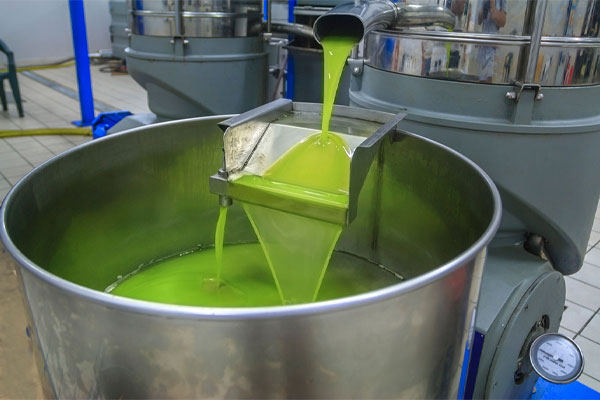
Separating Oil from the Fruit
The olive paste then enters the extraction stage.
Using centrifugal separation, the different components of the olive paste are separated according to their density. The process separates the olive oil from the solid fruit material and the naturally occurring vegetation water.
This modern mechanical technology allows us to obtain the oil efficiently while maintaining control over the quality of the final product.
A precise separation process that transforms fresh olives into pure olive oil.
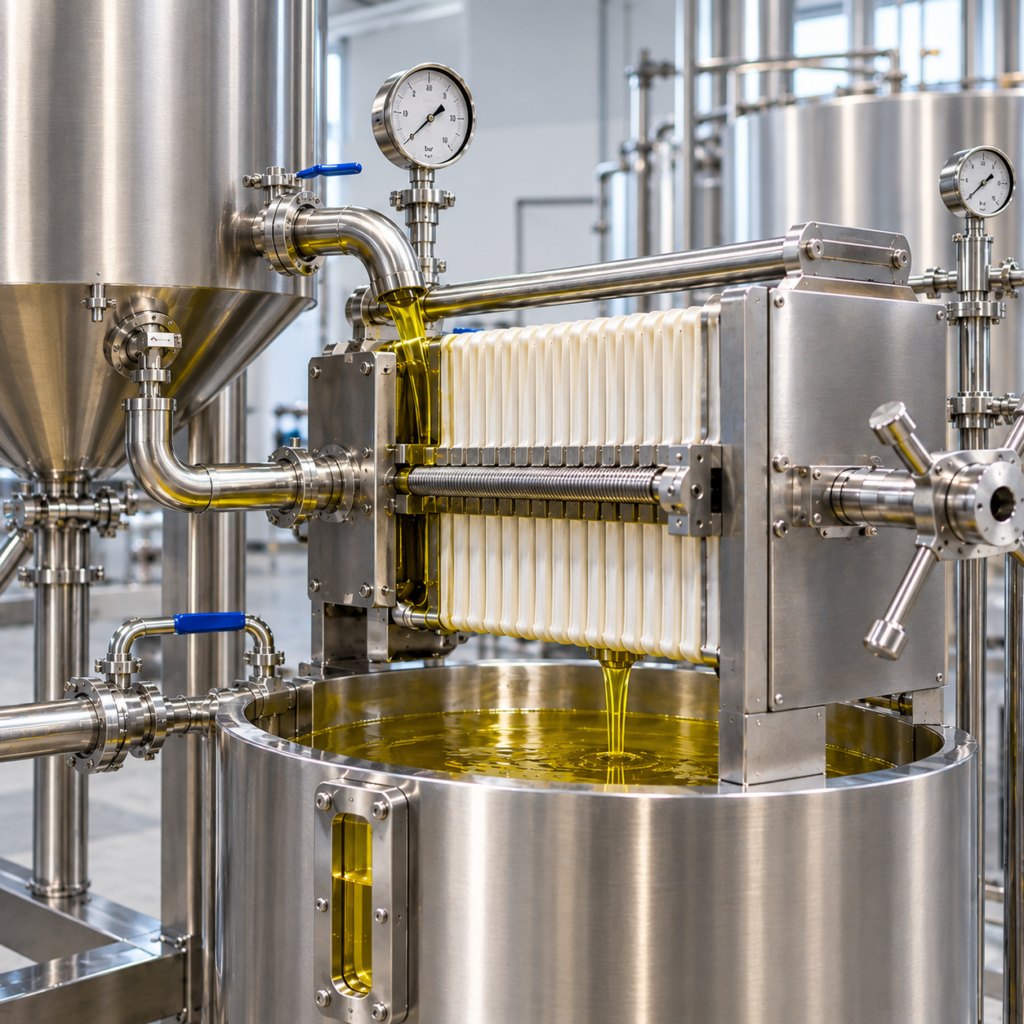
Protecting the Oil After Extraction
After extraction, the oil may undergo additional separation and clarification to remove residual water and fine particles, depending on the characteristics of the oil and the desired final product.
Every batch is handled with care and subjected to quality controls to ensure that it meets our standards before storage and bottling.
Our objective is not simply to produce olive oil, but to preserve its identity, stability, and sensory qualities throughout its journey.
Quality is monitored beyond extraction — because the process does not end when the oil is produced.
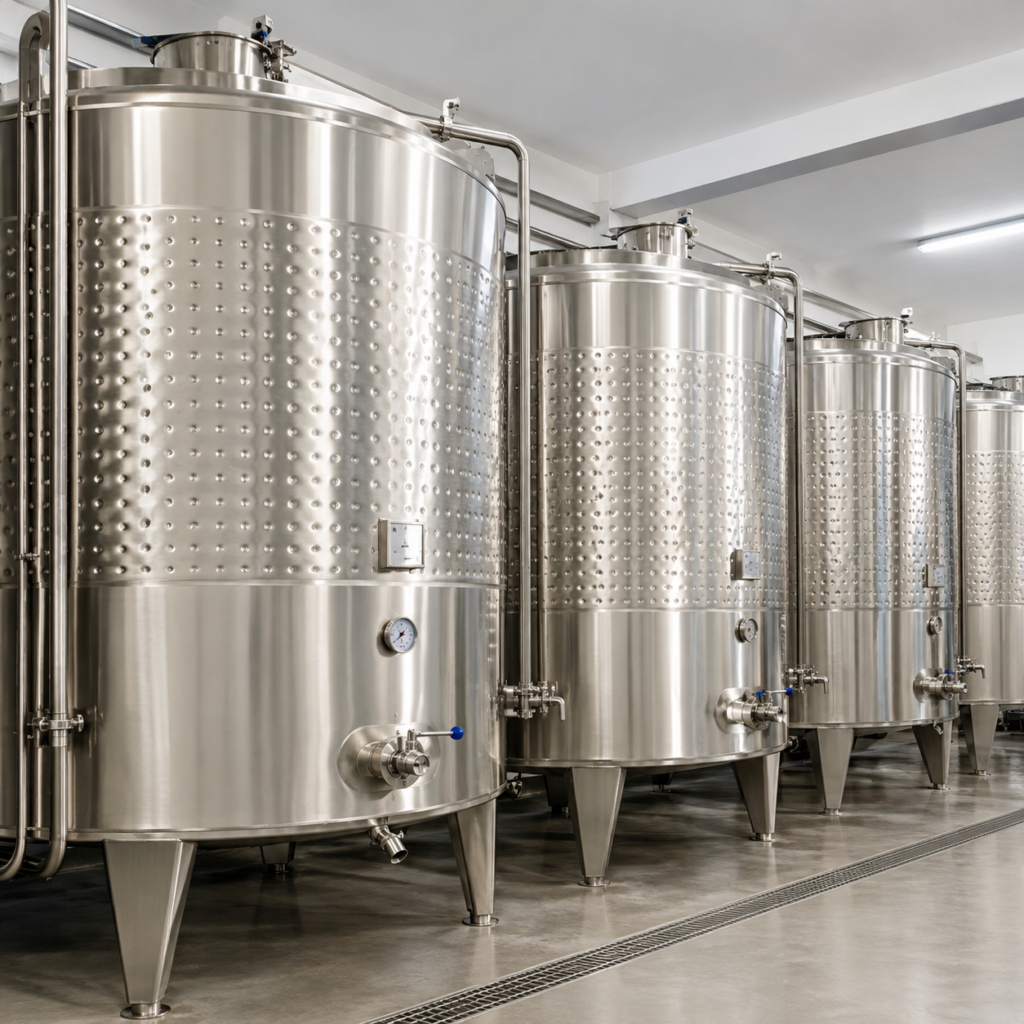
Protecting the Golden Liquid
Once produced, the oil is stored in appropriate food-grade stainless-steel tanks under controlled conditions.
Exposure to oxygen, heat, light, and time can affect olive oil quality. That is why storage conditions are carefully managed to minimize oxidation and preserve freshness.
Where appropriate, inert gas protection is used to further limit contact with oxygen.
From the mill to the bottle, protection matters.
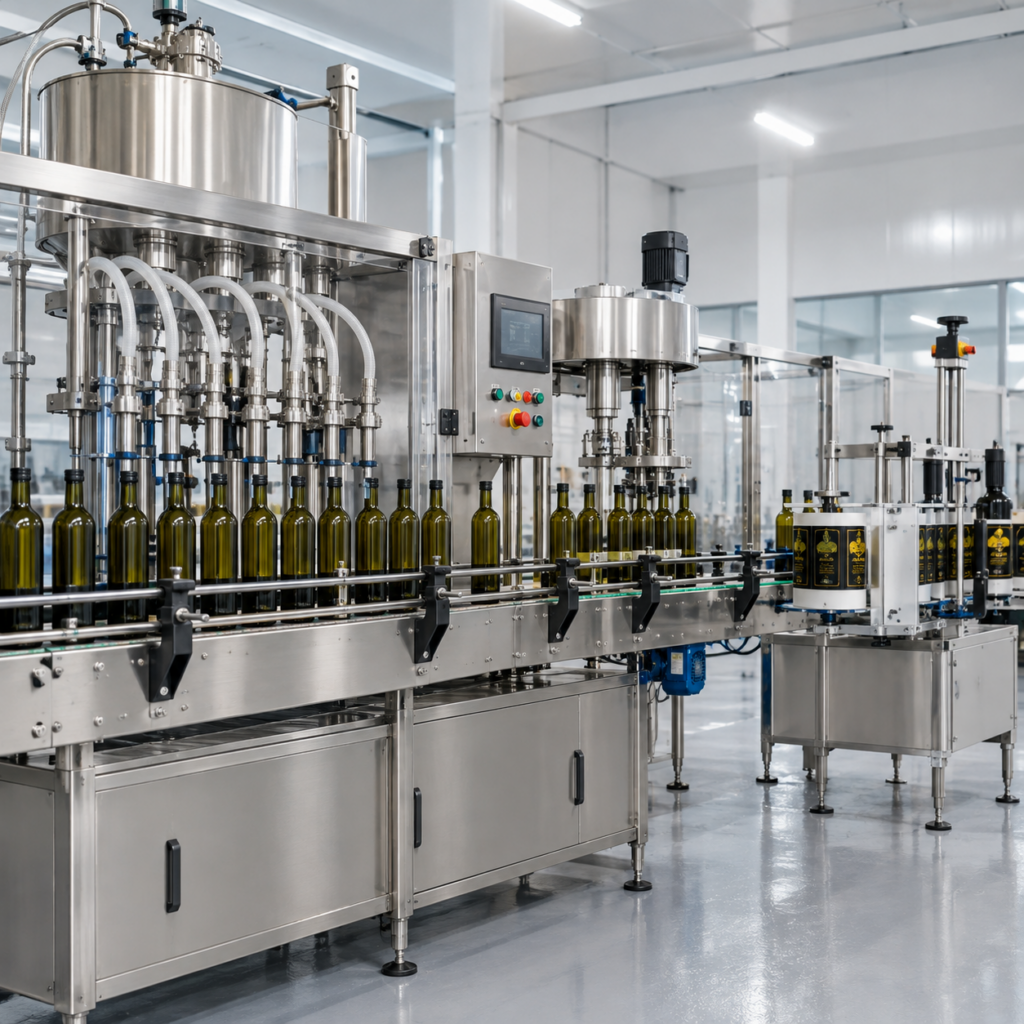
From Our Tanks to Your Table
The final stage is bottling.
Before filling, packaging materials are carefully prepared and inspected. The oil is then filled and sealed in carefully selected bottles or tins designed to help protect it from light and external influences.
Our packaging is more than presentation. It is the final layer of protection between our olive oil and the outside world.
Every bottle carries the result of a journey that began in the Tunisian olive grove.
From our land. Through our hands. To your table.
 English